Pay in installments of $7.30 with
 ,
,
 and
and

Shipping Estimate
USA
- USA
- CAN
- USA
- CAN
Ships within 48 hours · Estimated delivery Jul 3 - Jul 8
 Promo Codes Available:
For Your Every Summer RSVP, with Code: SUMMER15
Description
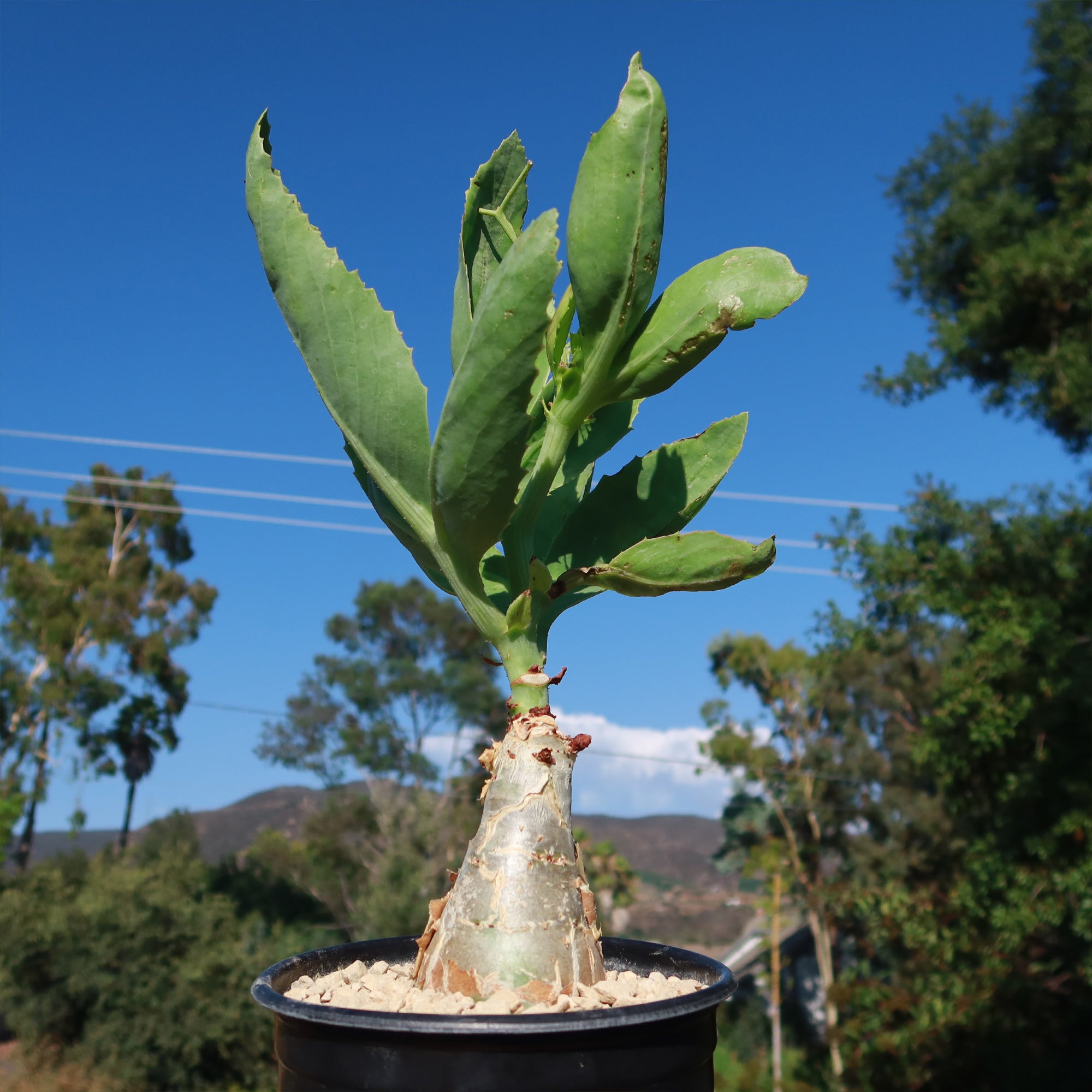
wild grape succulent Cyphostemma juttae 6"Pot (Dormant)Introducing the rare Cyphostemma juttae, a fascinating and unique succulent plant, a member of the Cyphostemma genus. It has several other common names, such as Namibia grape, wild grape, and tree grape, because of its large grape like bunches. This summer growing species is known for its striking appearance and impressive growth habit. Originally from Namibia, it grows in rocky, arid areas covered by open, semi tropical forests exposed to very dry
Introducing the rare Cyphostemma juttae, a fascinating and unique succulent plant, a member of the Cyphostemma genus. It has several other common names, such as Namibia grape, wild grape, and tree grape, because of its large grape-like bunches. This summer-growing species is known for its striking appearance and impressive growth habit.
Originally from Namibia, it grows in rocky, arid areas covered by open, semi-tropical forests exposed to very dry and hot conditions. The Cyphostemma juttae has thick, succulent stems that can grow up to several 6 feet tall and 6 feet wide, giving it a tree-like appearance. The yellow-green stems are covered in a thick, corky bark that helps protect the wild grape from the intense heat and dry conditions of its natural habitat.
The leaves of this Cyphostemma juttae are large, ovate, shiny, toothed, and they typically fall off during the winter, helping the plant conserve water. The caudex can become quite large and impressive over time, adding to its unique and visually appealing characteristics.
The flowers of Cyphostemma juttae are in small and inconspicuous, greenish-yellow clusters that can add a touch of beauty to its already impressive appearance. This succulent, with its inconspicuous flowers, is a true showpiece for both containers and gardens due to its large grape-like bunches of bright wine-colored berries at the end of summer.
Go to Soil cactus mix blend 1 gal 4 qt cacti succulent dirt compost growing mediaTo propagate Cyphostemma juttae, you can try using stem cuttings or seeds for successful reproduction. Cuttings should be repotted in coarse river sand or in a well-drained potting mix.
Watering Needs
The Cyphostemma juttae, being a drought-tolerant succulent plant, has low watering needs. Like other caudiciform plants, it is important to allow the soil to dry out completely between waterings to prevent overwatering, which can lead to root rot. During the summer growing season, water your Cyphostemma sparingly to keep the plant cool. Make sure the soil is thoroughly soaked before watering again.
In contrast, during the dormant period in colder winter months, you should reduce watering significantly as your Cyphostemma juttae requires less moisture. It is best to water only when the soil is completely dry, about once every few weeks or even less frequently. Remember, this succulent is adapted to arid conditions, so it is more tolerant of underwatering than overwatering.
Observing the Cyphostemma juttae leaves can also provide clues about their watering needs. If the leaves appear plump and firm, it indicates that it is well-hydrated. On the other hand, if the leaves start to wrinkle or become soft, it may be a sign that your succulent needs water. Always remember to adjust your watering routine based on the specific conditions of your environment and the individual needs of Cyphostemma juttae, as too often, plants die as a result of overwatering.
Light Requirements
The Cyphostemma juttae loves basking in full sunlight to partial shade for at least 4-6 hours daily! It craves those rays to thrive and show off its unique features. Find a sunny spot near a south-facing window or in a well-lit area of your home where it can soak up the light. However, be careful not to expose your fully grown plant to direct sunlight for extended periods, as it can scorch the leaves.
If you're growing the Cyphostemma juttae outdoors, make sure to provide it with some shade during the hottest parts of the day to protect it from intense sunlight. This Cyphostemma is well-suited to arid and desert-like environments, so it can handle a good amount of sunlight. Just keep an eye on it to ensure it's not getting too much direct exposure.
Remember, each succulent plant is unique, so pay attention to how your Cyphostemma juttae responds to the light conditions in your specific location. If it starts to show signs of sunburn, like yellowing or browning leaves, it may be an indication that it needs a bit more shade. On the other hand, if it becomes leggy or stretches towards the light, it might be a sign that it needs more direct sunlight.
In summary, the Cyphostemma juttae enjoys bright, indirect sunlight and can tolerate some direct sunlight, but be mindful of its individual needs and adjust the light conditions accordingly.
Optimal Soil & Fertilizer Needs
The Cyphostemma juttae favors heavy clay soils, loamy or sandy soil that drains well. Planting them in ordinary soil quality will result in compacted roots, stunted growth, and, most likely, root rot. Instead, make or buy a well-draining potting mix, or ideally use our that contains 5 natural substrates and mycorrhizae to promote the development of a strong root system that helps your succulent to thrive.
When it comes to fertilizing the Cyphostemma juttae, it doesn't require excessive amounts of nutrients. A balanced, low-to-medium strength fertilizer can be applied during the growing season, such as a 5-10-5 fertilizer. However, it's important not to over-fertilize, as this can lead to excessive growth and potentially harm the Cyphostemma plant.
Remember, it's always a good idea to observe your succulent for any signs of nutrient deficiencies or excesses. If you notice pale or yellowing leaves, it may be a sign that the plant needs some additional nutrients. Adjusting the fertilizer application accordingly can help maintain the health and vitality of your Cyphostemma juttae.
Hardiness Zone & More
The Cyphostemma juttae are hardy to 26 F (or less), but it is best to avoid freezing temperatures, especially if the plants are young. Cyphostemma comes from the hot, dry areas of southern Africa, so it has no problem taking temperatures up to 65 F - 85 F; however, it may need some afternoon shade in hot climates to avoid leaf burn. In terms of hardiness zones, the Cyphostemma juttae is typically suited for USDA hardiness zones 9-11.
In these zones, the very sought-after plant Cyphostemma juttae can withstand mild winter temperatures and thrive in the warm, sunny conditions of its natural habitat. It is advisable to keep plants in large containers that can be transferred quickly to a protected area if one lives in a very damp environment. Since cyphostemmas are only partially resistant to frost, this is also beneficial in areas with severe frost. Therefore, if you live in a colder region, it's best to grow your Cyphostemma jutte as a container plant that can be brought indoors during the winter months or provide protection from frost.
With the help of Cyphostemma juttae, you'll start to spend less time maintaining your garden and more time taking in its beauty!
Shipping Notes
- Free Standard Shipping on $100+ Orders to the USA.
- Except Preorder products are shipped in 48 hours.
- Delivery to the USA:
- Standard Shipping : 3-10 business days
- If time is of the essence, please consider selecting expedited delivery for faster service.
Exchange/Return Notes
- We offer a 30-day return/exchange service after receiving.
- Final sale items are not eligible for returns or exchanges.
- To process your return/exchange, please contact us at [email protected]
- Please click here for more details>>> Return & Exchange Policy